Here is a story you may have heard before. On August 3rd 2012, writer for tech site
wired.com, Mat Honan
, had his virtual life completely destroyed. It all started with a security flaw from the two companies, Apple and Amazon. A hacker was able to gain access to Honan's vital information by presenting small bits of information to Apple and Amazon's customer service. The hacker used information that anyone can obtain such as the last four digits of a credit card or social security number, an address, a phone number, or even an utility bill. All of these things are easily obtainable because they are either asked for frequently by many websites or you can obtain them by going through someones garbage. Apple and Amazon gave the rest of Honan's information to the hacker where the hacker proceeded to destroy Honan's virtual life for the very dull reason of wanting Honan's twitter account name. Despite the lax security from major companies such as Apple and Amazon, Honan attributed his downfall to having all of his accounts "daisy-chained together" and not using "two-factor authentication" for his Google account.This meant that the hacker had access Honan's email and was able to easily guess the passwords to Honan's other accounts including social websites.
What the unfortunate events of Mat Honan gives everyone is the importance of protecting their various website accounts. According to a
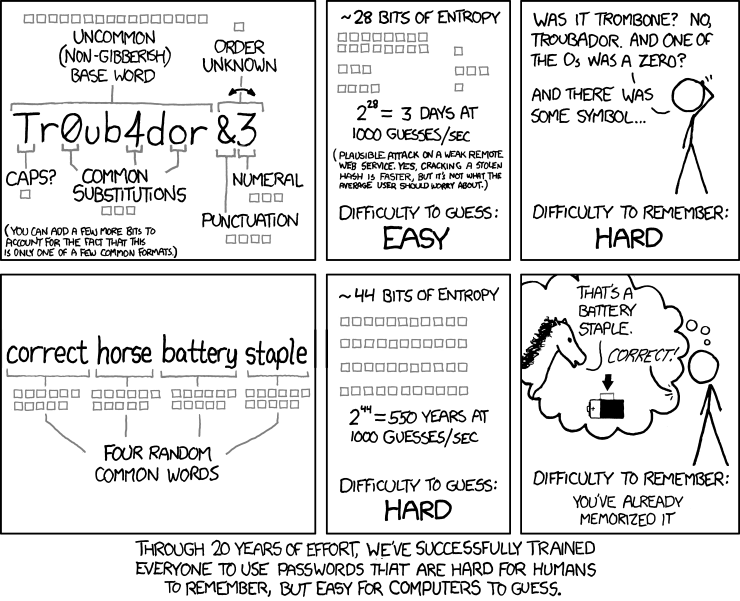
study done by Internet security company BitDefender, 75% of 250,000 people surveyed used the same password for both their emails and social networking accounts. In other words, if someone had access to just one of your passwords, then they can gain access to everything else if you used the same password. Two-factor authentication is available for some websites such as Google Accounts but other websites won't have such a tool and will most likely not have the same security strength as Google. A popular comic is being passed around the Internet which gives a useful password tip.
However this method does not deter someone from using the same password for everything. There is no easy method to remember multiple passwords. Physically writing down passwords is insecure(but you will know who used them), password managers from programs such as AVG and Norton work well but they can also be insecure because you are keeping all of your passwords in one location. There is no easy way to memorize multiple passwords that are also strong security wise, but if you use multiple social networking sites and have a very active virtual life, it might be worth it to do so. Using multiple strong passwords for your various accounts is better than going through the nightmare that Mat Honan has faced.